Road signs · 4 MIN READ
Read the shape before you read the sign
A visual starting point for U.S. road signs: recognize familiar shapes, connect colors to purpose, and practice the right response.
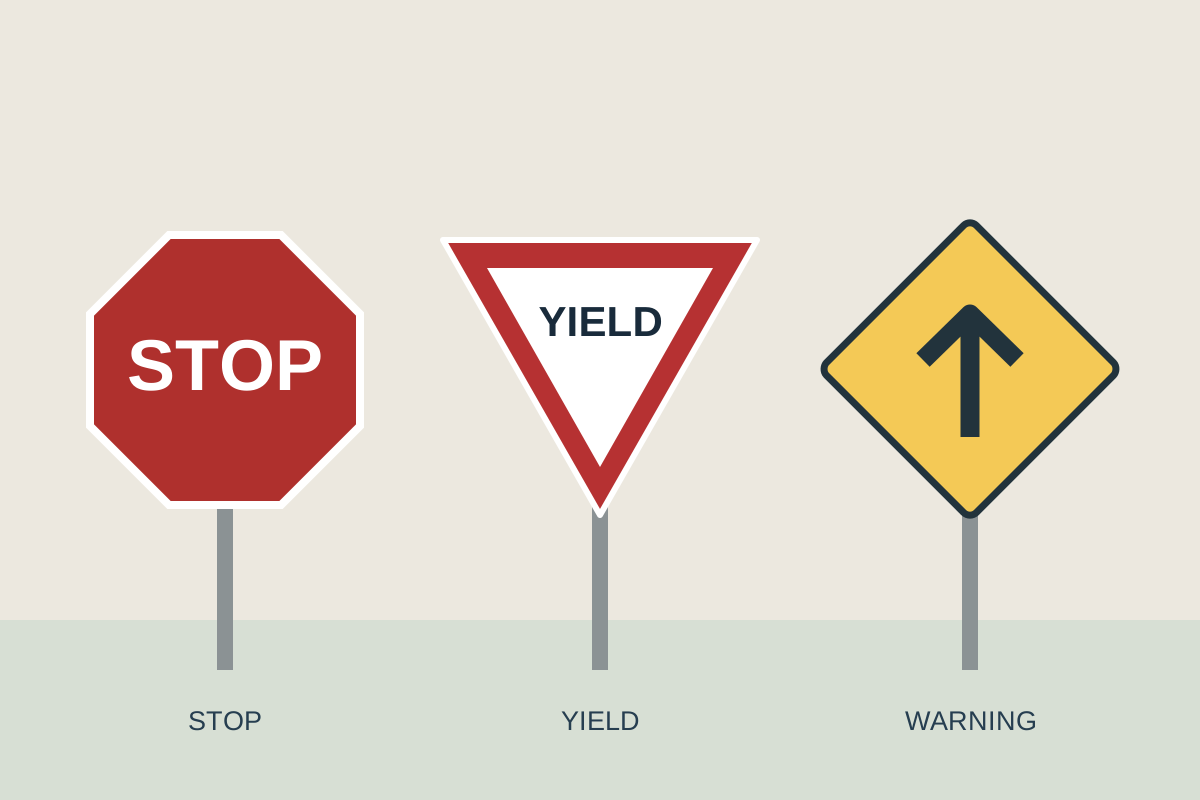
Start with three unmistakable silhouettes
An octagon identifies a STOP sign. A downward-pointing triangle identifies YIELD. A diamond usually warns about a condition ahead. Sketch these shapes from memory, then connect each to an action. Recognizing the outline is a first clue; you still need the sign’s message and the traffic situation.
Add school and railroad clues
The five-sided school sign and round railroad advance-warning sign are useful silhouettes to learn next. Do not confuse the round advance warning with the crossbuck at a crossing. Study the examples in your state handbook and notice where each sign appears relative to the hazard.
Use color as a category, not a complete answer
White commonly appears on regulatory signs, yellow on warnings, orange in temporary traffic-control areas, and green on guide signs. Blue is associated with road-user services; brown with recreation and cultural destinations. Red is used for stop, yield and prohibition. These are starting points, not a rule that every sign of one color requires the same action.
Turn a flashcard into a driving decision
For each sign, answer three questions: what does it mean, where might I see it, and what should I do next? A curve warning is not just a name to memorize. It asks you to think about the road ahead. For a regulatory sign, distinguish a requirement from advice or a warning. Read any supplemental panel too.
Practice outside the familiar examples
Mix sign recognition with questions about pavement markings and signals. In a safe setting as a passenger, notice how signs relate to intersections and road conditions; do not study your phone while driving. Use official illustrations when precision matters. The graphic here is a learning illustration, not a manufacturing specification or a substitute for the handbook.
Official references
Use your state's current official handbook for applicable rules and application requirements. Independent practice is not an official exam or a guarantee of passing.